
Escalate the concern, never the colleague
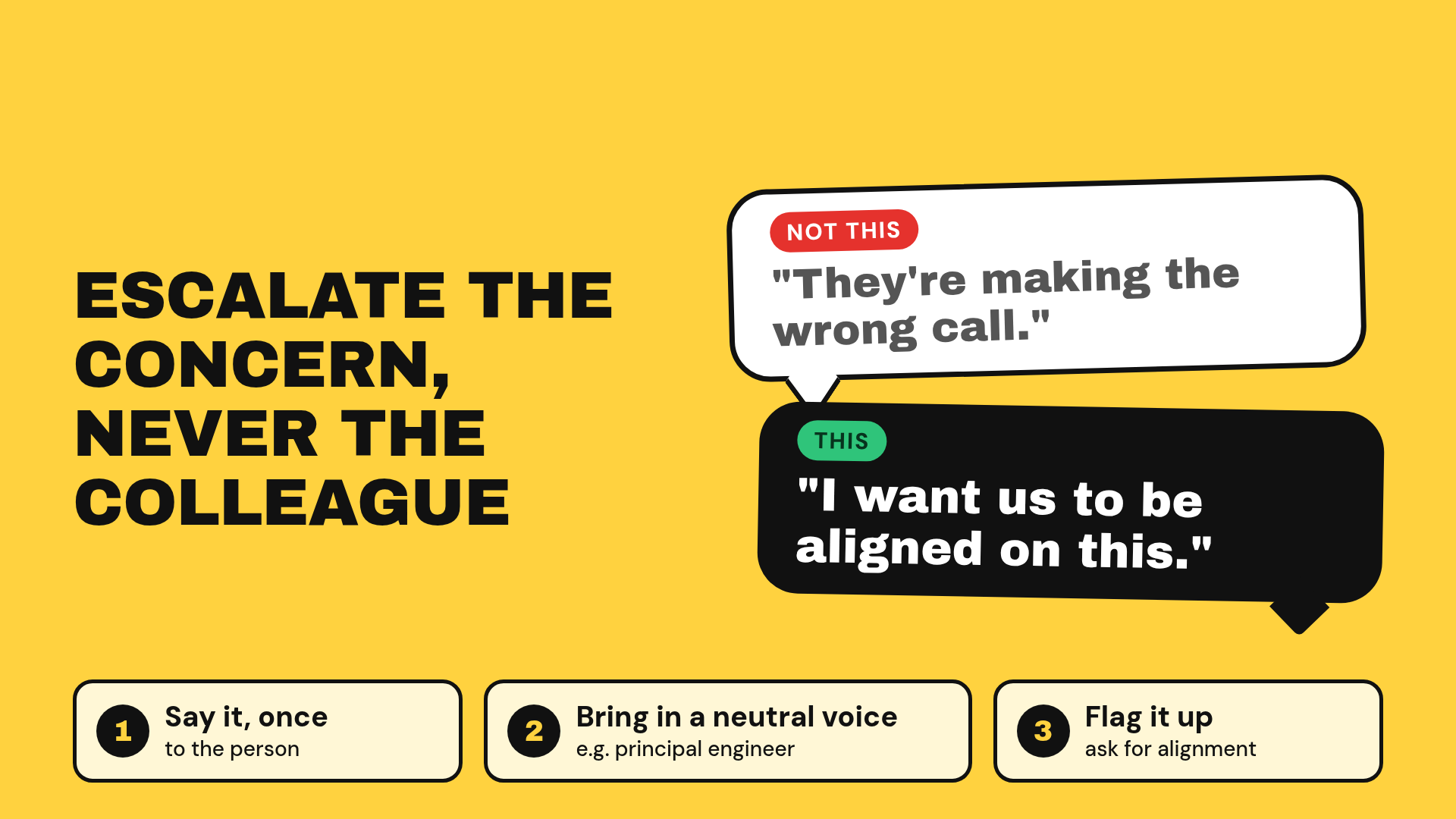
Pushback that isn't landing can tempt you to go silent or go over someone's head. Try three steps instead: say it once, bring in a neutral voice, then flag it asking for alignment.

Many engineers hit this wall at some point: you see an architectural decision heading somewhere it shouldn't, and you have no formal authority to stop it. You're a peer, not a manager. What do you actually do?
I talked through exactly this with someone I mentored recently. They could see it. Saying so wasn't landing.
There are two bad options people often default to. Stay quiet and let the concern die, or go straight to the manager and frame it as "they're getting this wrong." The first can waste good judgement. The second can burn trust you'll need again next quarter.
I gave a three step path instead.
First, say it clearly and directly, once, to the person making the call. Many disagreements can resolve here. If it lands, you're done. If it doesn't, you've discharged your responsibility and you're allowed to let it go rather than repeating yourself into a grudge.
Second, if the stakes are genuinely high and it's still unresolved, pull in a cross stack perspective, someone senior enough to weigh in on the architecture without the conversation becoming about the person. This depersonalises the disagreement and gives everyone a way to update their position without losing face.
Third, and only if it still matters, escalate up. This is where many people get the framing wrong. You are not building a case that a colleague is incompetent. You are asking for alignment. "I want us to be on the same page about this" opens a conversation. "They keep getting this wrong" closes one, and it tends to close doors for you too, because people rarely want to work with someone who escalates by throwing people under the bus.
None of this is about avoiding conflict. It's about making sure the conflict is about the decision, not the person who made it. Influence without formal authority is a slow build, mostly earned by being right, repeatedly, without rubbing anyone's nose in it. But you still need a clean way to escalate for the moments patience alone won't fix.
Next time you're tempted to escalate, check your own framing first. Are you asking for alignment, or are you building a case?