
Signal vs Noise.

When founders ask me how to prioritise, they usually want a single trick. I give them two frameworks instead, because each does a different job, and the magic is in running them together.
The first is signal-to-noise. Write down every possible thing you could work on: all of it, no filtering. Then identify the roughly 20% that produces the most immediate signal: the work that moves the business, teaches you something real, or unlocks the next step. Everything else is noise.
The nuance people miss is in that word noise. It doesn't mean worthless. It means noise at this point in time. A task you park today can become the signal six months from now when the context changes. You're not deleting it; you're sequencing it. That reframing makes cutting psychologically possible, which is the entire battle. Most people can identify their priorities but can't bring themselves to drop everything else.
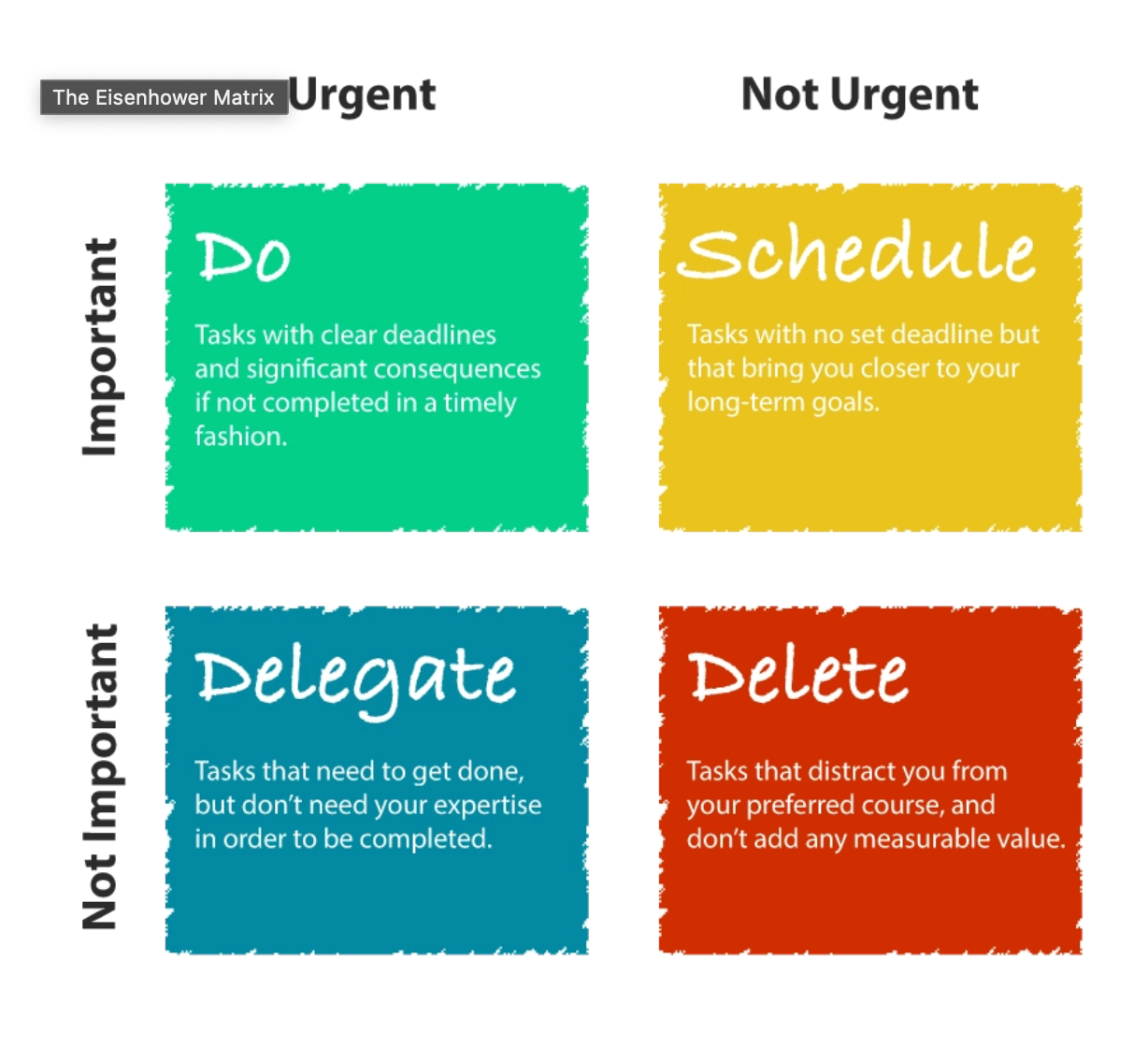
The second framework is the Eisenhower Matrix, which you apply to whatever survives the first cut. Important and urgent: do it now. Important but not urgent: schedule it, deliberately. Urgent but not important: delegate it. Neither: discard it. Where signal-to-noise tells you what matters, Eisenhower tells you what to do with each item - do, schedule, delegate, or drop.
The canonical example is Steve Jobs, who attributed his obsession with focus to exactly this instinct. At Apple's annual strategy retreat he'd push the top 100 leaders to agree on the ten most important things to do next, then strike out seven and declare they could only do three. When he came back to Apple in 1997, with the company months from bankruptcy, he cut the product line from over 300 to 10. That radical subtraction is what saved it.
Run both frameworks daily. Find your signal. Then decide what to do with it. The founders who win aren't the ones doing the most, they're the ones who got ruthless about the rest.